

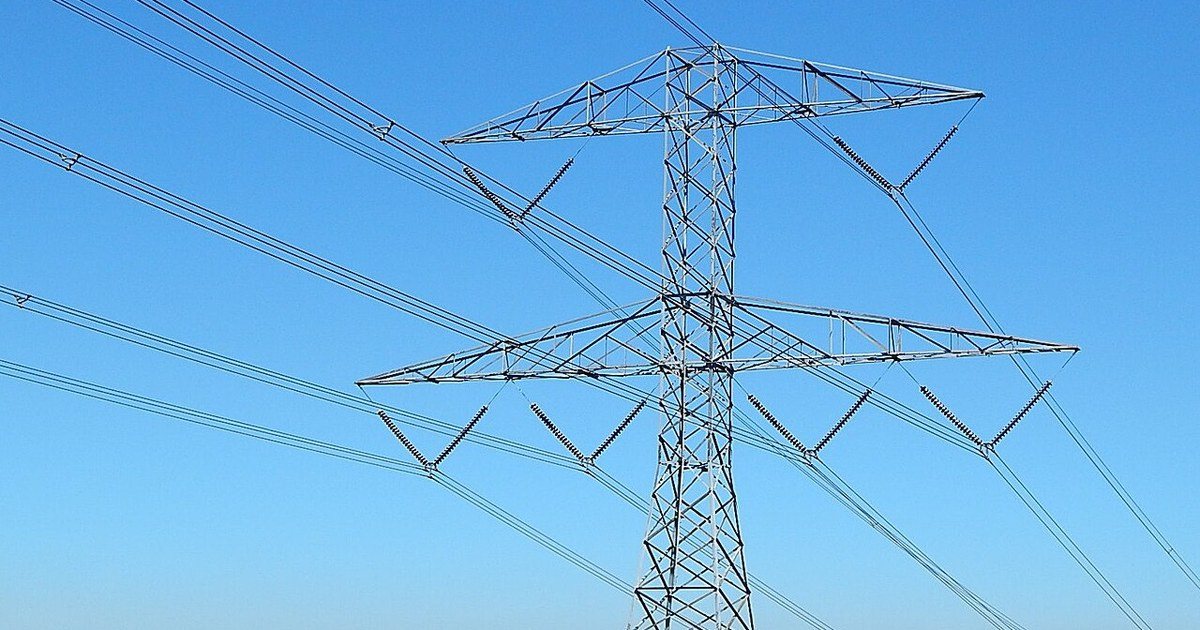
The Senate voted 73 to 25 on Monday, November 9, to start debate on a major bipartisan permitting reform bill. It's called the Bipartisan American Affordability and Jobs Act. The goal is simple: make it faster and cheaper to build things in America, especially power lines, pipelines, power plants and mines.
This was not the final vote. It was a procedural vote that lets the Senate take up the bill. It needed 60 votes and got 73, which tells you the bill has real support from both parties. But there are still several steps before it can become law.
Who wrote it
Four senators negotiated the bill with the White House and introduced it in late September. Two are Republicans: Shelley Moore Capito of West Virginia, who chairs the Environment and Public Works Committee, and Mike Lee of Utah, who chairs the Energy and Natural Resources Committee. Two are Democrats: Sheldon Whitehouse of Rhode Island and Martin Heinrich of New Mexico, the top Democrats on those same committees.
President Trump backs it. In a post on Truth Social he urged all senators to vote for it and called it "a BIG WIN for U.S. ENERGY INDEPENDENCE and DOMINANCE." He said it would "codify our America First Energy Agenda."
Why it matters
Anyone who has followed a big project in this country knows the problem. A new power line, pipeline or mine can take many years to get through federal reviews and court fights. Costs go up while the paperwork drags on, and in the end it's families and businesses who pay through higher power bills. Capito put it this way: communities have waited too long in "regulatory limbo."
Demand for power is also climbing fast, in large part because of new data centers. The grid needs a lot more lines and plants, and the current rules make that slow.
What's in the bill
The bill is long and touches many laws, including the National Environmental Policy Act (NEPA), the Clean Water Act, the Endangered Species Act, the National Historic Preservation Act and the Federal Power Act. Here are the main parts, according to news reports and the senators who wrote it:
- Faster environmental reviews. It shortens NEPA reviews for energy projects. These reviews are a big reason projects take years.
- Fewer lawsuits to block projects. It shortens the time opponents have to file legal challenges and makes it harder to sue to stop projects on environmental grounds.
- Permits that stick. It aims to stop a future administration from revoking permits that were already granted. Developers could also sue the government if it treats one kind of energy unfairly compared to another. That protects oil and gas projects from one party and wind and solar projects from the other.
- Limits on blocking projects early. It limits the ability of states and the EPA to block projects before they get going.
- Power lines. It makes it easier to build transmission lines to move more power around the country. This was a key ask from Democrats.
- Pipelines and gas exports. It speeds up natural gas pipelines and export terminals for liquefied natural gas (LNG). This was a key ask from Republicans, along with relief for mines and traditional energy.
- Data centers pay their own way. A part called the Ratepayer Protection Act would make companies building new data centers pay for the power and grid upgrades they need, instead of passing those costs on to regular customers. It also sets up a program to help local governments where data centers are proposed.
Who voted how
Republicans voted almost as a bloc for it. The only Republican no was Sen. Mike Rounds of South Dakota. Democrats split. Twenty-four voted no, including Jeff Merkley of Oregon, Ron Wyden of Oregon, Cory Booker of New Jersey, Mark Kelly of Arizona, Tammy Duckworth of Illinois, Adam Schiff of California and Chris Van Hollen of Maryland. Democrats who voted yes include Senate Democratic Leader Chuck Schumer, Raphael Warnock and Jon Ossoff of Georgia, Elissa Slotkin of Michigan and Ruben Gallego of Arizona.
Several senators who voted yes said they might not vote for the final bill. Schumer said he still has concerns and wants changes to protect water, land and local say over projects. Republican Lisa Murkowski of Alaska and Democrat Catherine Cortez Masto of Nevada both pointed to objections from tribes. Cortez Masto said she won't vote for final passage unless the part dealing with tribal rights is taken out.
What each side says
Supporters include construction companies, building trades unions, utilities and energy groups from oil and gas to solar. Whitehouse claims the bill would save consumers $60 to $80 a month and boost wind, solar and battery storage. Those are his estimates. One study by the Center for Climate and Energy Solutions and Greenline Insights estimated it would lower home electric bills by $1.8 billion overall and cut power plant emissions about 10 percent by 2035.
Opponents include the Sierra Club, other environmental groups and several tribes. They say the bill weakens environmental protections, cuts public input and makes it harder to fight projects in court. Merkley said he likes the power line and data center parts, but not the faster pipelines and gas exports.
There's also friction on the right. Trump said he won't approve new wind turbines, calling them "a major loser," even while backing the bill. That worries some Democrats who signed on because of the clean energy parts.
What happens next
- The Senate can spend up to 30 more hours on the motion before the bill itself is formally on the floor.
- Then comes an amendment process. Whitehouse called it a "healthy amendment process." This is the last real chance to change the bill in the Senate.
- A final Senate vote is expected later in November.
- Then it goes to the House. It has broad Republican support there and some Democratic support. House Democratic Leader Hakeem Jeffries has signaled opposition and is still reviewing it.
Timing is the big risk. Congress is in its lame-duck session after the midterms, and some members who lost re-election may not show up to vote. If it isn't done before the new Congress starts in January, the whole process would have to start over.
The bottom line: this is the closest Washington has come in years to fixing a system almost everyone agrees is too slow. Whether it gets across the finish line in the next few weeks is still an open question.
Sources
- ENR: Permitting reform inches closer to passage with Senate vote enr.com
- The Epoch Times: Senate advances bipartisan energy permitting reform bill theepochtimes.com
- Yahoo News: Senate advances bipartisan permitting reform, teeing up passage yahoo.com
- The Washington Sun: Senators advance bipartisan permitting reform washingtonsun.com
- Heatmap News: Permitting reform survived its first test heatmap.news
- FingerLakes1: Schumer backs permitting debate, seeks changes fingerlakes1.com