

The U.S. Supreme Court on Monday, November 9, allowed the Trump administration to restart border wall construction in the Big Bend region of West Texas, including a section inside Big Bend National Park. The 8-1 order lifts a lower court's freeze while the lawsuit against the project continues.
What the Court decided
In an unsigned order, the justices lifted a preliminary injunction issued on October 2 by U.S. District Judge Kathleen Cardone in El Paso. That injunction had stopped construction and suspended the government's waivers of environmental and other laws for the project.
The majority gave several reasons:
- A 1996 immigration law gives the secretary of Homeland Security broad power to waive other laws to build border barriers quickly, and it sharply limits what courts can review.
- Under that law, courts can generally hear only constitutional challenges. The Court said the administration is "exceedingly likely" to win its argument that this dispute is really about how a statute is read, not about the Constitution.
- Congress showed a "clear preference for expeditious border construction," which the Court said outweighs "any aesthetic, recreational, and environmental harm" the plaintiffs described.
Justice Ketanji Brown Jackson was the only dissenter. She did not write an explanation.
What the order does and does not do
The order is temporary. It lets work continue while the case moves forward, until the lower court rules on the lawsuit or the Supreme Court decides whether to take up the case fully. It is not a final decision on whether the government's sweeping waivers are legal.
What is being built
According to the administration, the project covers a stretch of roughly 500 miles in the Big Bend sector of the border. Outside the park, the plan calls for pedestrian barriers about 30 feet tall in many areas. Inside Big Bend National Park itself, the plan is different: a 17-mile vehicle barrier system, in separate sections, rather than the tall wall planned elsewhere. Vehicle barriers are lower structures meant to stop cars and trucks rather than people on foot.
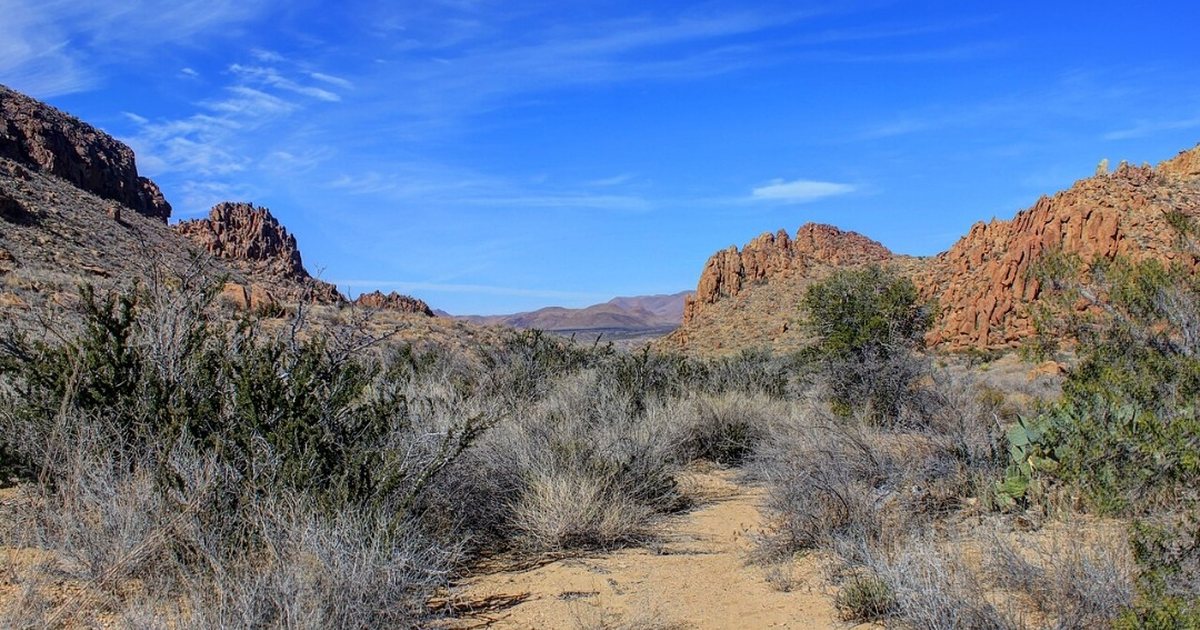
Big Bend National Park, created in 1944, covers more than 800,000 acres of desert, mountains and canyons, and about 118 miles of its southern edge follows the Rio Grande along the border with Mexico. It draws hundreds of thousands of visitors a year and is one of the most remote parks in the lower 48 states.
Why the lower court had stopped it
Judge Cardone found that the plaintiffs were likely to win at least one of their claims and would suffer serious harm without an injunction. She read the 1996 law as allowing waivers only in "areas of high illegal entry," and found that the Homeland Security secretary likely went beyond that authority in this region, which sees far fewer illegal crossings than other parts of the border.
Who is suing
The lawsuit was filed by the Center for Biological Diversity, an environmental group, together with Friends of the Ruidosa Church, a local preservation group, and a Big Bend-area river guide and landowner. They argue the waivers of dozens of laws, including environmental protections, go beyond what Congress intended and should require clear approval from Congress. After the ruling, the plaintiffs said it clears the way for "bulldozing and blasting" in the region.
Opposition to the park section has not come only from environmental groups. Some local residents, ranchers and business owners in the region, from both parties, have also spoken against building barriers through the park.
What each side says
- The administration says border security is a top national priority, that Congress gave the government clear power to build barriers quickly, and that courts should not be able to block the work on statutory grounds.
- The plaintiffs say the government is using the waiver power in a place where it was never meant to apply, causing lasting damage to a national park and private land.
Why it matters
The case tests how far the government's waiver power reaches and how much courts can do to check it. Since 2005, Homeland Security secretaries of both parties have used waivers to speed border construction, and courts have almost always upheld them. A final ruling here could settle whether there are any limits on where that power can be used.
What to watch next
- When construction actually restarts in the Big Bend sector.
- Further rulings in the El Paso court, and any appeal.
- Whether the Supreme Court agrees to hear the full case.
We may earn a commission from Amazon links on this page, at no extra cost to you. As an Amazon Associate, Common Sense Desk earns from qualifying purchases.
Sources
- Fox News: Trump wins Supreme Court approval to restart Texas border wall work foxnews.com
- Breitbart: Supreme Court lifts order blocking Trump's Big Bend border wall breitbart.com
- KSAT: Big Bend border wall construction can resume after Supreme Court ruling ksat.com
- Texas Tribune: Judge halts border barrier construction in Big Bend (October 2) texastribune.org
- Houston Public Media: Judge halts Big Bend area border wall construction, use of federal waivers houstonpublicmedia.org
- Center for Biological Diversity (plaintiff): press release biologicaldiversity.org