

We may earn a commission from Amazon links on this page, at no extra cost to you. As an Amazon Associate, Common Sense Desk earns from qualifying purchases.
In November 2024, right after the U.S. election, The Economist published The World Ahead 2025. Its cover, drawn by illustrator Ben Jones in his usual black and red, was full of small pictures. Within days, some sites were calling it a map of "globalist control."
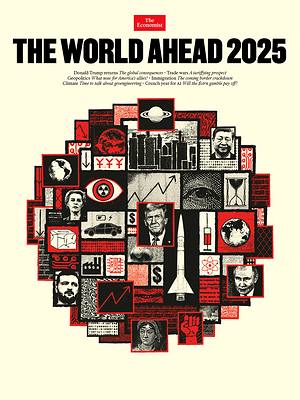
2025 is over now, so let's check it the common-sense way: what the cover showed, what each picture most likely pointed to, and what actually happened.
The cover, and the conspiracy reading
The issue went online on November 19, 2024, according to The Economist's press release, and was edited by Tom Standage. The magazine's own post on X credits the illustration to Ben Jones.
Two days later, a Croatian website claimed the cover showed elite plans for control, "15-minute cities" and hidden occult Saturn imagery. Croatian fact-checker Faktograf rated that claim false on November 28, 2024. It found the pictures simply follow the themes printed inside the issue, and that the black-and-red look is the artist's normal style.
The Economist doesn't publish an official key, so the readings below match the pictures that published descriptions agree on with the forecasts in the issue. We've left out one picture tied to health topics.
The cover, picture by picture
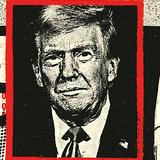 Trump in the center, framed in red. The issue's main theme: Trump would shape the whole year. What happened: a hit. His tariffs and foreign policy dominated 2025.
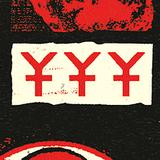 Trade and currency symbols. The issue predicted a U.S.-China trade war, with tariffs hitting allies too. What happened: a hit. An executive order on April 2, 2025 set a 10% baseline tariff on nearly all imports. U.S. tariffs on Chinese goods climbed to a combined 145%, and China's on U.S. goods to 125%, before talks in Geneva on May 12 cut them back. Allies weren't spared: a July 31 order set 15% for Japan and 25% for India.
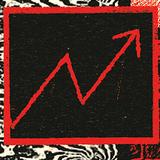 A rising graph. The issue warned tariffs could slow growth and push prices back up. What happened: partly. The International Monetary Fund put 2025 world growth at 3.2%, only a little below what it expected a year earlier, and said the tariff hit was milder than feared. U.S. consumer prices rose 2.7% in the year to December 2025, according to the Bureau of Labor Statistics. The Federal Reserve still cut rates, to 3.5% to 3.75% on December 10.
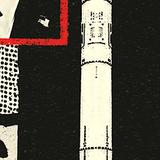 Rockets and missiles. A more dangerous world, with governments spending more on defense. What happened: a hit. At their summit in The Hague on June 25, 2025, NATO members agreed to aim for 5% of GDP on defense and related security by 2035.
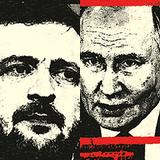 Figures of the Russian and Ukrainian leaders. The issue suggested Trump might push for a deal. What happened: no deal in 2025. Trump and Putin met in Alaska on August 15 without an agreement. Each side kept its own conditions, which the other rejected.
- The Middle East. The issue expected Trump to give Israel a free hand. What happened: mixed. A U.S.-brokered Gaza ceasefire took effect on October 10, and 20 hostages and about 2,000 prisoners were released on October 13.
 A broken ballot box. Voters wanting change. What happened: mixed. Germany's opposition conservatives won in February. But Australia re-elected its prime minister in May, and Canada's governing Liberals won again in April under their new leader, Mark Carney.
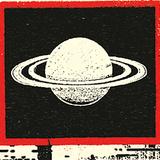 Saturn. The one the conspiracy posts loved. Faktograf found it most likely pointed to a forecast in the issue: Saturn's rings would seem to vanish from view. What happened: a hit, and a sure one. Earth passed through the plane of Saturn's rings on March 23, 2025, so they looked edge-on, almost invisible. It's a predictable event in the solar system, not a code.
 An hourglass. A picture of time passing that shows up on these covers often, according to Faktograf, rather than a forecast.
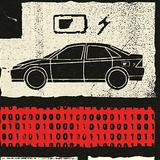 An electric car. Clean energy, and whether world emissions would finally peak. What happened: a miss. Fossil fuel CO2 emissions rose about 1.1% to a record 38.1 billion tonnes, according to the Global Carbon Budget.
 Technology and AI. The issue asked if 2025 would be "crunch time" for AI, with investors losing faith. What happened: not yet. Big Tech's planned spending on AI rose to about $364 billion. That call was unresolved in 2025, not proven wrong.
The scorecard
By our count: about six hits, three mixed results and three misses or open questions. The Economist's own look back, posted on December 22, 2025, said its 2025 predictions "were not too bad," but that "some things didn't quite come to the crunch we expected."
That's an honest grade for a forecast. Notice again what kind of things they got right: a president's stated plans, a summit already scheduled, a planet's orbit. What they missed were the hard calls, like an emissions peak or a Ukraine deal.
About that Saturn
Saturn is a good example of how "decoding" goes wrong. To someone hunting for hidden meaning, a planet on a cover looks occult. To an astronomer, it's a note that the rings would line up edge-on in March 2025, which NASA had known for years. Same picture, two very different readings. Only one of them could be checked, and it came true on schedule.
For a readable look at why predictions succeed or fail, Superforecasting by Philip Tetlock is worth a read.
What it means for you
- The trade call mattered for your wallet. Tariffs did arrive, and they did show up in some prices. Forecasts like this one are worth reading for that kind of heads-up.
- The "plan" idea doesn't fit the record. A group that ran the world wouldn't miss its own emissions target or fail to get a deal it wanted.
- When a post says a cover hides a secret, check whether the same idea is printed plainly inside. For 2025, it was.
Sources
- The Economist (PR Newswire): The Economist launches The World Ahead 2025 prnewswire.com
- Faktograf: fact-check of a conspiracy reading of the cover (Nov. 28, 2024) faktograf.hr
- Federal Register: Executive Order 14257, reciprocal tariffs federalregister.gov
- NATO: The Hague Summit Declaration (June 25, 2025) nato.int
- IMF: World Economic Outlook, October 2025 imf.org
- Federal Reserve: FOMC statement, Dec. 10, 2025 federalreserve.gov
- NASA: Crossing Saturn's ring plane science.nasa.gov
- Global Carbon Budget: Fossil fuel CO2 emissions hit record high in 2025 globalcarbonbudget.org