
We may earn a commission from Amazon links on this page, at no extra cost to you. As an Amazon Associate, Common Sense Desk earns from qualifying purchases.
A year ago, in November 2025, The Economist published The World Ahead 2026. The cover, drawn by illustrator Andrew Rae, was one of its busiest yet: a birthday cake, a chained fist, swords over a falling graph, tanks, a brain wired to a game controller, melting ice and a footballer. Some websites called it "super creepy" and a warning of war and collapse planned by the elites.
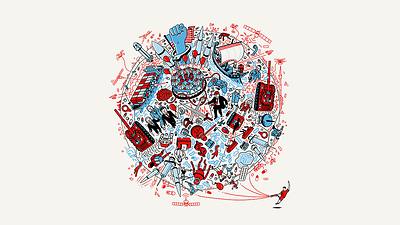
2026 isn't over, but most of it is. So here's an honest mid-term report card: what the cover showed, what each picture most likely pointed to, and what has actually happened so far.
The cover
The World Ahead 2026 came out on November 10, 2025, the 40th edition of the annual, edited by Tom Standage. The Economist doesn't publish a symbol-by-symbol key, so the readings below match the pictures that several outlets describe the same way with the trends printed inside the issue.
A warning first: in late summer 2026, fake "World in 2027" covers copied this cover's style, with the cake, a container ship, a handcuffed fist, pills and syringes. AAP FactCheck and Georgia's Myth Detector both found them fake, and an Economist spokesperson confirmed it. If you've seen a scary "2027" version with a cake on it, that's probably the fake.
The cover, picture by picture
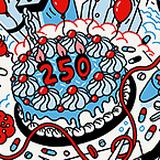 A "250" birthday cake, an American flag and a voting symbol. America's 250th birthday and the midterm elections as a verdict on Trump. What happened: a hit. July 4 brought a record fireworks show, with 851,000 fireworks, though heat canceled a parade in Washington, the AP reported. On November 3, Democrats won control of both the House and the Senate.
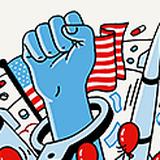 A handcuffed fist chained to the cake. This one isn't explained anywhere we could find, and conspiracy sites read a lot into it. The most likely plain reading is the issue's worry about a divided, angry country in its anniversary year. Nothing in the issue's forecasts describes a plan.
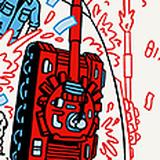 Tanks and missiles. The issue's war theme was "War or peace? Yes": fighting would go on in several places while ceasefires stayed shaky. What happened: half right. The blurred line between war and peace held true. But the cover didn't foresee the biggest war of the year: the U.S. and Israel began strikes on Iran on February 28, 2026. A truce signed in June collapsed, the U.S. reimposed a naval blockade in July, and there's still no deal as of mid-November.
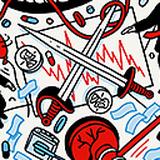 Crossed swords over a falling market graph, with coins and dollar signs. Economic risk: worries about bond markets and pressure on the Federal Reserve. What happened: a partial hit. Kevin Warsh was confirmed as Fed chair 54-45 in May. The 10-year Treasury yield is around 5.1%. Inflation picked up as fuel prices jumped, with consumer prices up 3.7% over the year to September. There's been stress, but not a full crisis so far.
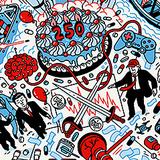 A brain wired to a game controller. AI, and the risk of an AI bubble bursting. What happened: partly, so far. AI stocks have had a rough November. On November 5, the S&P 500 fell 4.4% and the Nasdaq 5.5%, putting the Nasdaq in a correction. But the S&P 500 is still up about 7% for the year. A wobble, not a bust.
- China (some readings see Xi on the cover). China's opportunity in a messy world. What happened: mostly as expected. Trump and Xi met in Beijing in May, and the trade truce was extended to January 10, 2027, according to Treasury Secretary Scott Bessent.
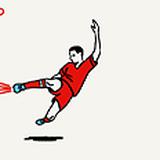 A footballer shooting a ball. The World Cup in North America, and a worry that fans might stay away. What happened: the opposite. FIFA reported a record 6.8 million fans, nearly double the old mark, and Spain beat Argentina in the July 19 final.
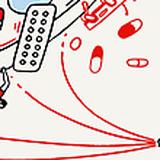 Pills. Weight-loss drugs going mainstream, "Ozempic, but better." What happened: a hit. The FDA approved Eli Lilly's weight-loss pill on April 1, 2026, with a cash price starting around $149 a month.
 Melting ice cubes. Climate. The issue called the climate picture mixed. We haven't scored this one yet, since full-year temperature data comes out in January.
What the cover missed
The biggest thing missing from the cover is the one that's hit your wallet hardest: fuel prices. After the Iran war began, diesel hit a record $5.85 a gallon and gas reached $4.14 in early September, up from under $3 before the war. Gas fell back below $4 on November 12 for the first time since July, but AAA says it's still the most expensive November on record.
So the cover warned about war in general, but not about this war, and not about what it would do at the pump.
The scorecard so far
By our count: about three clear hits, four partial hits, two clear misses and a few we can't score yet. The hits were things already on the calendar, like the 250th birthday, the midterms and new drugs in the approval pipeline. The misses were the surprises: a new war and an oil shock.
That's the pattern every year. A forecast is good at the scheduled and the slow-moving. It's bad at the sudden. A secret plan would be the other way around: the big surprises would be the parts they got right.
If you want to dig into why forecasting works like this, Superforecasting by Philip Tetlock explains it well.
What it means for you
- Use these forecasts as a watch list, not a prophecy. The 2026 list correctly flagged inflation and market risk, which matter for savings and borrowing.
- Expect surprises. No magazine saw the oil shock coming. Keeping a little emergency savings matters more than reading any cover.
- Be careful with "decoded" posts, especially ones about a 2027 cover with a cake on it. That one was fake.
We'll check back in January with the full 2026 results.
Sources
- AAP FactCheck: Fake Economist cover spreads on social media (Sept. 10, 2026) aap.com.au
- Myth Detector: Fake versions of The Economist's cover mythdetector.com
- AP (via U.S. News): Fireworks, heat and politics: America celebrates its 250th birthday usnews.com
- PBS NewsHour: Senate confirms Warsh as Federal Reserve chairman pbs.org
- Bureau of Labor Statistics: Consumer Price Index news release bls.gov
- FIFA: Spain-Argentina final caps record-breaking tournament inside.fifa.com
- AAA: National average drops below $4 for the first time since July newsroom.aaa.com