

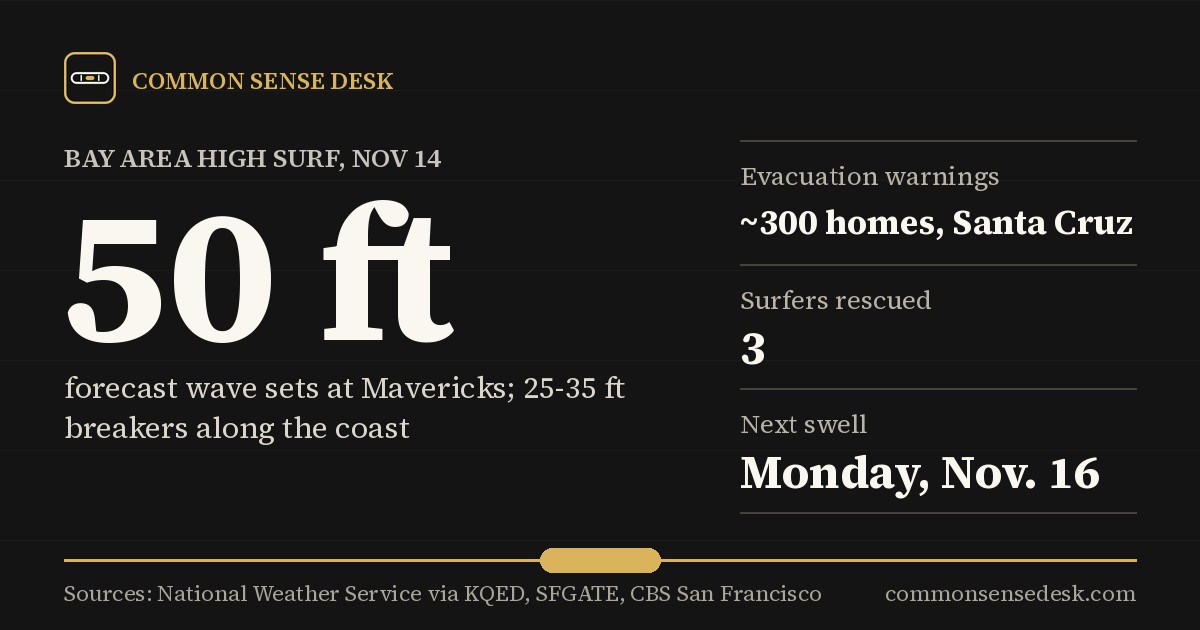
Huge waves slammed the Northern California coast on Saturday, November 14, pushing seawater into streets, garages and parking lots from Pacifica down to Santa Cruz. Nearly 300 homes in Santa Cruz were put under evacuation warnings, three surfers had to be rescued, and beaches were closed. Sunday brought a short break, but forecasters say another round of big surf arrives Monday.
Here's what happened, how big it was, and what to do if you live on the coast.
How big were the waves?
The National Weather Service issued a High Surf Warning from Friday into early Sunday for the coast from the North Bay down through Monterey Bay and Big Sur, according to CBS San Francisco and KQED. Forecasters called for breaking waves of 25 to 35 feet, with some sets reaching 50 feet in spots like Mavericks, the famous big-wave surf break in San Mateo County.
That's rare for November. The Scripps Institution of Oceanography said forecast wave heights this large had happened only one other time in November in the 27-year record of the Point Reyes buoy, according to SFGATE.
The cause was an extreme low-pressure system hundreds of miles offshore that sent a huge swell toward the coast, Weather Service meteorologist Roger Gass said.
What got hit
According to SFGATE and local reports:
- Santa Cruz: nearly 300 homes near the shoreline were placed under evacuation warnings, and city beaches were closed Saturday.
- Pacifica: waves topped seawalls and flooded streets, garages, basements and cars, according to video shared by the San Francisco Chronicle. Pounding surf also battered piers along the coast.
- Santa Cruz County: three surfers reportedly needed to be rescued on Saturday.
- Parking lots along the coast flooded, and some roads near the water were closed.
No deaths or serious injuries were reported as of Sunday.
The warnings were blunt
"The risk of drowning is very high this weekend," Weather Service forecasters wrote, according to KQED. The Bay Area office added: "No selfie is worth risking your life."
The U.S. Coast Guard told people to "stay clear of beaches until local lifeguards and law enforcement officials announce that water recreation is safe."
That advice matters, because the biggest danger in surf like this usually isn't the flooding. It's people walking out onto rocks, jetties and seawalls to watch or film, and getting knocked down or pulled in by a "sneaker wave," a wave much bigger than the ones before it that runs far up the beach without warning.
More is coming
Sunday was calmer, but forecasters expect a second swell on Monday, November 16. Santa Cruz County officials warned people to stay off the beaches even during the lull.
It's also the start of a stormy stretch. KQED reported three storms lined up over about a week: the first Friday, a second Sunday into Monday, and a third possibly by midweek. UC climate scientist Daniel Swain said the Bay Area could get 2 to 10 inches of rain over the second half of November, and flagged "king tides," the highest tides of the year, from late November through January as a time of extra flooding risk.
That fits the bigger winter picture. NOAA's winter outlook favors a wetter-than-usual season across much of the southern half of the country, though Northern California is near the edge of that zone.
If you live near the coast
Common-sense steps, from the warnings issued this weekend:
- Stay off rocks, jetties, piers and seawalls during high surf. Never turn your back on the ocean.
- Don't drive through flooded roads. Saltwater wrecks cars, and you can't see what's under it.
- Move cars and valuables out of low garages and basements before high tide.
- Know your evacuation route if you're under a warning, and have a bag ready.
- In San Francisco, call 311 for non-emergency flooding, clogged drains or fallen trees. Call 911 for emergencies.
What it means for your wallet
Ocean flooding is one of the most expensive kinds of damage a home can take, and here's the catch many people learn too late: standard homeowners and renters insurance usually doesn't cover flood damage, including seawater. That takes separate flood insurance, most often through the federal National Flood Insurance Program. Policies typically have a 30-day waiting period before they kick in, so it's worth checking your coverage now, before the king tides and the rest of the winter storms arrive. Car flood damage is usually covered only under comprehensive auto coverage.
What to watch next
- Monday's second swell and any new High Surf Warnings.
- Whether Santa Cruz lifts its evacuation warnings.
- The next storms midweek.
For current alerts and your city's forecast, check our weather page.
Sources
- SFGATE (via Yahoo News): Photos, videos show mammoth waves hitting Bay Area shoreline yahoo.com
- KQED: 'Enormous waves' and triple storms target greater Bay Area starting Friday kqed.org
- National Weather Service, San Francisco Bay Area office weather.gov