

The furnace is about to start working hard again, and the first big heating bill of the season is on its way. The good news: if you heat with natural gas, like almost half of American homes, the government expects your bill to be a bit lower this winter. The bad news: if you heat with oil, it's going to hurt.
Here's what the U.S. Energy Information Administration (EIA) expects you'll pay this winter, what actually drives your bill, and whether a heat pump or a furnace makes more sense.
What you'll pay this winter
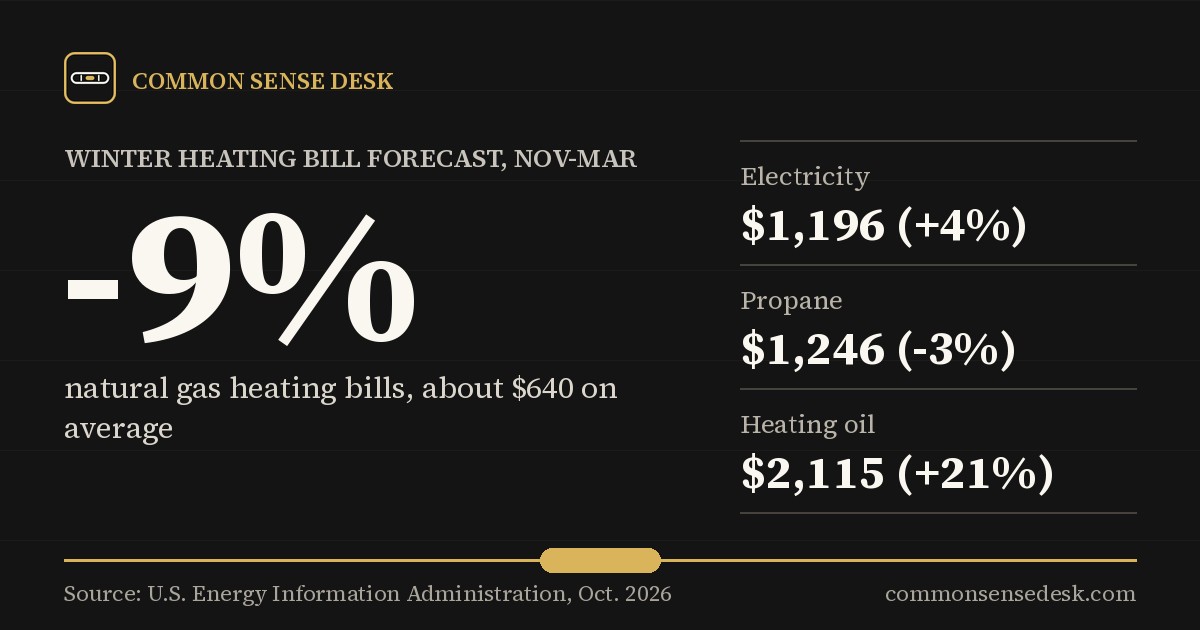
The EIA's Winter Fuels Outlook, released October 6, estimates what a typical household will spend on heating from November through March, depending on the main fuel it uses:
- Natural gas: about $640, down 9% from last winter. About 46% of U.S. homes heat mainly with gas.
- Electricity: about $1,196, up 4%. More than 40% of homes heat mainly with electricity.
- Propane: about $1,246, down 3%.
- Heating oil: about $2,115, up 21%. Only about 3% of homes use it, mostly in the Northeast.
Where you live matters a lot. Gas bills are expected to drop in the Northeast (down 14%), the Midwest (down 10%) and the South (down 15%), mostly because of lower prices and a winter forecast to be similar or milder. The West is the exception: the EIA expects a noticeably colder winter there, so gas bills are forecast to rise about 7% and electric heating bills about 9%.
The EIA expects the national winter to be about the same temperature as last winter and the 10-winter average. It also warns a strong El Niño could change that, so these numbers are a guide, not a promise.
Why heating oil is up so much
Heating oil is basically the same product as diesel. The EIA says global crude oil and diesel prices are higher, and fuel stocks on the East Coast are low: they were 32% below their five-year average in September and are expected to stay 20% to 30% below normal through the winter. The EIA expects the price of heating oil to run about 34% higher than last winter, around $5.26 a gallon on average. A milder winter forecast for the Northeast takes some of the sting out, which is why the total bill is up 21% and not more.
For gas, there's a cushion. The EIA says U.S. natural gas storage is going into the winter 2% above the five-year average. "Relatively high natural gas inventories entering the winter season provide a cushion for heating demand," EIA Administrator Tristan Abbey said.
How much heat does your home really need?
Your bill comes down to two things: the price of your fuel and how much of it you burn. You can't control the price. You can control a good part of the second one.
- Turn the thermostat down when you're asleep or out. The U.S. Department of Energy says you can save as much as 10% a year on heating and cooling by turning the thermostat back 7 to 10 degrees for 8 hours a day. A programmable or smart thermostat does it for you.
- Seal the leaks. Drafty doors, windows and attic openings let paid-for heat walk out the door. Weatherstripping and caulk are cheap weekend jobs.
- Change the furnace filter. A clogged filter makes the system work harder. Check it monthly in the heating season.
- Get the system checked. A yearly tune-up catches problems before they turn into a no-heat call in January.
Heat pump or furnace?
A furnace makes heat by burning gas, propane or oil, or by running electricity through a heating element. A heat pump doesn't make heat; it moves it, pulling warmth from the outside air (yes, even cold air) and bringing it inside. Running in reverse, it also works as an air conditioner.
Because it moves heat instead of making it, a heat pump uses a lot less electricity than electric baseboards or an electric furnace. The Department of Energy says a heat pump can cut the electricity used for heating by about 50% compared with electric resistance heat.
Plain common sense on choosing:
- If you heat with electric baseboards or an electric furnace, a heat pump is often the biggest money-saver available.
- If you heat with oil or propane, a heat pump can pay off, especially with oil prices up this year. Many people keep the old system as a backup for the coldest days.
- If you have natural gas, gas is cheap this winter, and a working gas furnace is hard to beat on cost. It usually makes sense to compare a heat pump when the furnace or the air conditioner needs replacing anyway, not to rip out a good system.
- Very cold climates: newer cold-climate heat pumps work far better than older models, but get a proper quote and sizing from a licensed installer.
Prices for installation vary widely by home and region, so get two or three written quotes and ask what's included.
If you need help paying
The federal Low Income Home Energy Assistance Program (LIHEAP) helps eligible households with heating bills; it's run through your state. Many utilities also offer budget billing, which spreads the winter cost over the year so January doesn't wipe out your budget. Call before you fall behind, not after.
The bottom line
Most households should see a similar or slightly lower heating bill this winter, unless you heat with oil or live in the West. Either way, the cheapest heat is the heat you don't waste: turn it down at night, seal the drafts and keep the system tuned up.
Sources
- U.S. Energy Information Administration: Winter Fuels Outlook 2026-27 eia.gov
- U.S. Energy Information Administration: EIA expects a mixed picture for winter fuel costs this year (Oct. 6, 2026) eia.gov
- U.S. Department of Energy: Energy Saver (thermostats, heat pump systems) energy.gov