

We may earn a commission from Amazon links on this page, at no extra cost to you. As an Amazon Associate, Common Sense Desk earns from qualifying purchases.
Every Thanksgiving, the same claim makes the rounds: the reason everyone is asleep on the couch by 4 p.m. is the turkey. Specifically, an amino acid in turkey called tryptophan.
It's one of the most widely repeated food facts in America, and it's shared again this week in posts, memes and holiday segments. It's also mostly wrong. The sleepiness is real. The turkey is mostly not to blame.
That goes for the leftover turkey sandwich today, too.
The claim
The claim goes like this: turkey is unusually high in tryptophan, tryptophan makes you sleepy, so eating a big plate of turkey knocks you out.
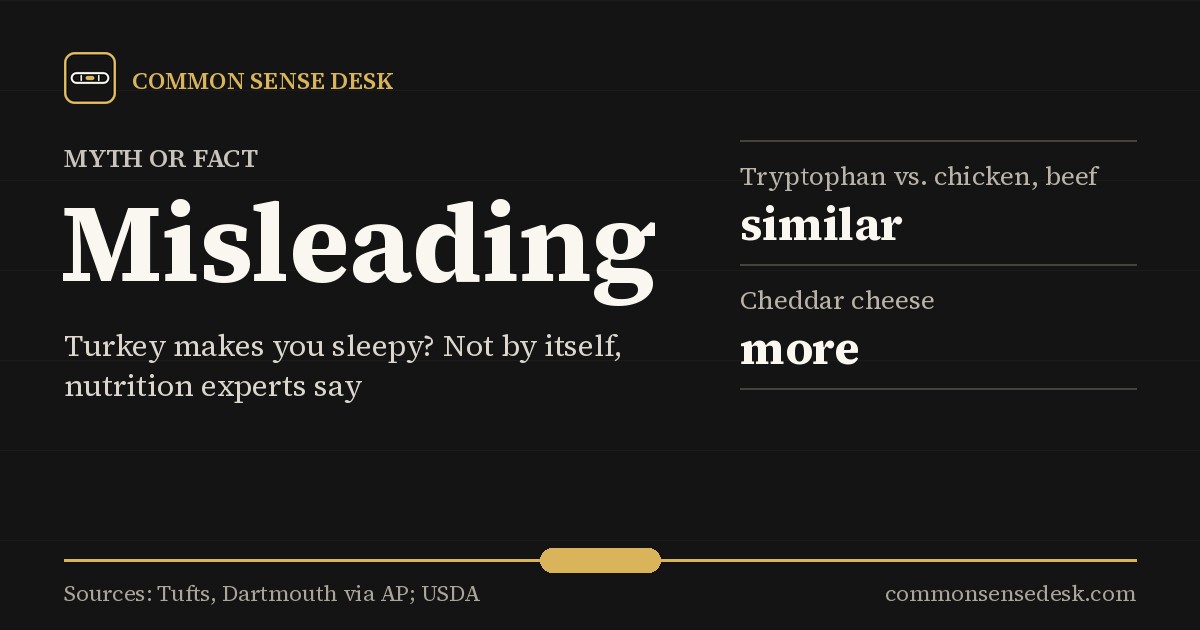
Verdict: Misleading. Turkey does contain tryptophan, and tryptophan is used by the body to make serotonin and melatonin, chemicals tied to mood and sleep. But turkey doesn't have unusually much of it, and the amount in a Thanksgiving serving isn't enough on its own to make you drowsy, nutrition experts say.
What's right
Tryptophan is real, and it really is in turkey. It's an essential amino acid, which means your body can't make it, so it has to come from food. Your body uses it to build proteins and to make serotonin, which in turn can be converted to melatonin, the hormone that helps regulate sleep.
So the basic chemistry behind the myth isn't invented. That's probably why it has lasted so long: it sounds scientific, and part of it is.
Reheating leftovers? A good instant-read meat thermometer is the easiest way to make sure they reach 165 degrees Fahrenheit, the temperature the USDA recommends for reheated leftovers.
What's wrong
The problem is the amount. "There's not enough of it in turkey to make you nod off," Kimberly Dong, an associate professor of public health at Tufts University School of Medicine, told the Associated Press this week. Chicken and beef have similar levels of tryptophan, she said, and cheddar cheese has even more.
Nobody blames a chicken sandwich or a cheeseburger for an afternoon nap, and the reason is the same: one protein-rich food doesn't deliver enough tryptophan to the brain to make you sleepy. Tryptophan also has to compete with other amino acids from the same meal to get into the brain, so eating more protein doesn't simply mean more of it gets through.
Read next: Myth or Fact: Is a 90-day nationwide blackout starting November 17?
So why does everyone get sleepy?
Experts point to the rest of the meal, and how much of it we eat.
Carbohydrates. Mashed potatoes, stuffing, rolls, sweet potatoes and pie add up to a lot of fast-digesting carbs. "What's happening is that people are eating a lot of carbohydrate-rich foods that are really quickly absorbed into the bloodstream," Dong told the AP. That causes a spike in blood sugar followed by a quick drop, and that roller coaster contributes to the tired feeling, she said.
Sheer volume. Overeating in general makes people sleepy, said Susan Roberts, a nutrition scientist at Dartmouth's Geisel School of Medicine, as reported by the AP. Digesting a very large meal takes a lot of the body's attention and energy.
The rest of the day. Common sense adds a few more: a glass or two of wine, an early start in the kitchen, travel the day before, a warm room full of people, and football on TV. Any one of those can make a nap tempting. Put together, they explain the classic post-dinner slump far better than one amino acid does.
For readers who like the science of cooking and eating, J. Kenji López-Alt's The Food Lab explains what really happens to food in the kitchen, and it's a fun read for anyone hosting this year.
A bonus myth: the "first Thanksgiving" menu
The same AP piece looked at another claim: that the modern Thanksgiving menu matches what the Pilgrims and Wampanoag ate in 1621. Only partly. The one surviving firsthand record, a letter from Pilgrim Edward Winslow, mentions five deer brought by the Wampanoag leader Massasoit and lots of wild fowl. Turkey was "highly likely" on the table along with duck and goose, said Malka Benjamin of the Plimoth Patuxet Museums. But there were no potatoes, and no cranberry sauce, because there was no sugar to make it.
What it means for your Thanksgiving
If you want to stay awake after dinner, skipping the turkey won't help much. What does help, based on what the experts describe: smaller portions, going easier on refined carbs and dessert, drinking water along with any alcohol, and a short walk after the meal.
And one leftover rule that is real: the USDA says to refrigerate leftovers within two hours and eat them within three to four days. A set of glass food storage containers makes that easier, and they reheat better than foil-covered plates.
The verdict
Misleading. Turkey contains tryptophan, and tryptophan does play a role in making sleep chemicals. But turkey has no more than chicken or beef and less than cheddar cheese, and not enough to make you sleepy by itself. The real cause of the post-dinner slump is a huge, carb-heavy meal on a long, busy day.
More from Common Sense Desk
Sources
- AP (via Sentinel Colorado): Experts debunk Thanksgiving food myths, from turkey 'coma' to risky leftovers, Nov. 24, 2026 sentinelcolorado.com
- USDA Food Safety and Inspection Service: leftovers and safe minimum internal temperatures